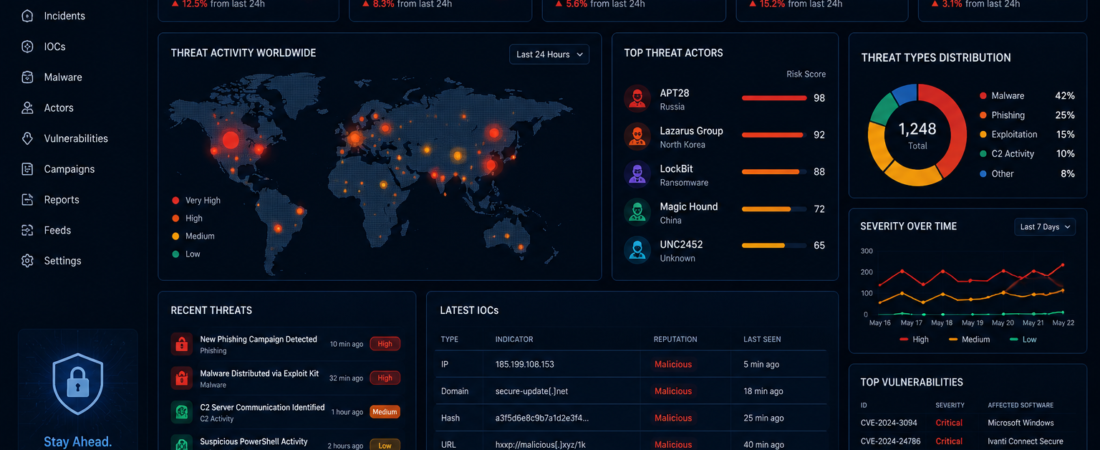
Introduction
Cyber threats continue to evolve in sophistication and frequency, making threat intelligence a critical component of modern cybersecurity programs. Threat intelligence helps organizations understand adversaries, anticipate attacks, and improve defensive capabilities.
However, threat intelligence is not a single concept. It is generally categorized into four levels: Strategic, Tactical, Operational, and Technical Intelligence. Each serves a different audience and purpose within an organization.
This article explains these intelligence types and how they support effective cyber defense.
What is Threat Intelligence?
Threat Intelligence is the collection, processing, analysis, and dissemination of information about current and potential cyber threats. The goal is to provide actionable insights that enable organizations to make informed security decisions.
Effective threat intelligence helps security teams:
- Understand attacker behavior
- Improve threat detection
- Prioritize security investments
- Reduce incident response time
- Strengthen security operations
Strategic Threat Intelligence
Strategic intelligence focuses on high-level trends, risks, and business impacts.
Audience
- CISOs
- Security Directors
- Executives
- Board Members
Key Questions
- What threats could impact our business?
- Which industries are being targeted?
- What emerging cyber risks should leadership monitor?
Examples
- Ransomware trends targeting healthcare organizations
- Nation-state threats against critical infrastructure
- Regulatory changes impacting cybersecurity
Strategic intelligence supports long-term security planning and risk management decisions.
Tactical Threat Intelligence
Tactical intelligence focuses on attacker tactics, techniques, and procedures (TTPs).
Audience
- Security Managers
- SOC Leads
- Detection Engineers
- Threat Hunters
Key Questions
- How are attackers gaining access?
- Which techniques are commonly used?
- What defensive controls should be improved?
Examples
- Phishing-based initial access
- Credential theft techniques
- Lateral movement methods
- MITRE ATT&CK technique analysis
Tactical intelligence helps organizations improve detection and prevention capabilities.
Operational Threat Intelligence
Operational intelligence provides information about specific attacks, campaigns, and threat actor activities.
Audience
- Incident Responders
- SOC Analysts
- Threat Intelligence Teams
Key Questions
- Who is conducting the attack?
- What infrastructure is being used?
- Which organizations are being targeted?
Examples
- Active ransomware campaigns
- Threat actor infrastructure
- Malware distribution methods
- Attack timelines
Operational intelligence enables security teams to respond quickly to emerging threats.
Technical Threat Intelligence
Technical intelligence consists of machine-readable indicators and technical artifacts.
Audience
- SOC Analysts
- Security Engineers
- SIEM Administrators
Examples
- IP Addresses
- Domains
- URLs
- File Hashes
- Registry Keys
- Email Indicators
Technical intelligence is often integrated into SIEM, EDR, IDS, and threat intelligence platforms to improve detection and response.
Comparing the Four Intelligence Types
| Type | Audience | Focus |
| Strategic | Executives | Business Risk |
| Tactical | Security Leaders | Attacker Techniques |
| Operational | Security Teams | Active Threat Campaigns |
| Technical | Analysts & Engineers | Indicators of Compromise |
Best Practices for Threat Intelligence Programs
- Align intelligence requirements with business objectives.
- Use multiple intelligence sources.
- Continuously validate intelligence quality.
- Map intelligence to MITRE ATT&CK.
- Integrate intelligence into security operations.
- Share actionable intelligence across teams.
Conclusion
Threat intelligence is most effective when organizations understand the different intelligence levels and apply them appropriately. Strategic, Tactical, Operational, and Technical Intelligence each provide unique value, helping organizations improve visibility, strengthen defenses, and make informed cybersecurity decisions.
Organizations that successfully operationalize threat intelligence are better positioned to detect threats early, reduce risk, and respond effectively to cyber incidents.